
A local Phoenix move can look simple on a map and still involve a full day of decisions. You need access to two properties, a plan for the belongings between them, and enough time to complete the handover without leaving important tasks unfinished. A short drive does not remove those responsibilities.
If you are searching for local movers in Phoenix, this guide shows how to organize a cross-town move starting around 85008. DrMove prioritizes nearby Valley moves and starts the quote process online. Your written binding price covers the inventory, services, and conditions in the agreed move; route eligibility and availability are confirmed for your addresses.
Define what local means for your actual job
Do not rely on the word local to describe the whole move. Write down every pickup and delivery address, including a storage unit or another household if applicable. The route should reflect all the work you want completed.
A move from one Phoenix neighborhood to another may have different access and timing from a move into Tempe or Scottsdale. The city boundary alone does not tell the mover where the truck can load, which floor your belongings occupy, or when the destination opens.
DrMove's initial focus is Phoenix 85008 and nearby communities within approximately 60 driving miles. That is a starting service-area description, not a promise that every requested route or date is available. Provide your exact locations for confirmation.
Decide between one organized move and repeated small trips
Living nearby can make repeated car trips tempting. Before choosing that approach, list what will fit safely in your vehicle, what needs professional handling, and how much time each trip will take. Include loading, unloading, parking, and returning to the old property.
You may decide to carry personal essentials yourself and arrange one planned move for the main inventory. That division can work well when the responsibilities are clear. Keep the mover's list separate from the items you will transport.
Avoid leaving an undefined pile for later. Loose leftovers often include awkward belongings that do not fit your vehicle or the final schedule. Decide how every item will reach its destination before the main appointment begins.
Build the move around access to the new home
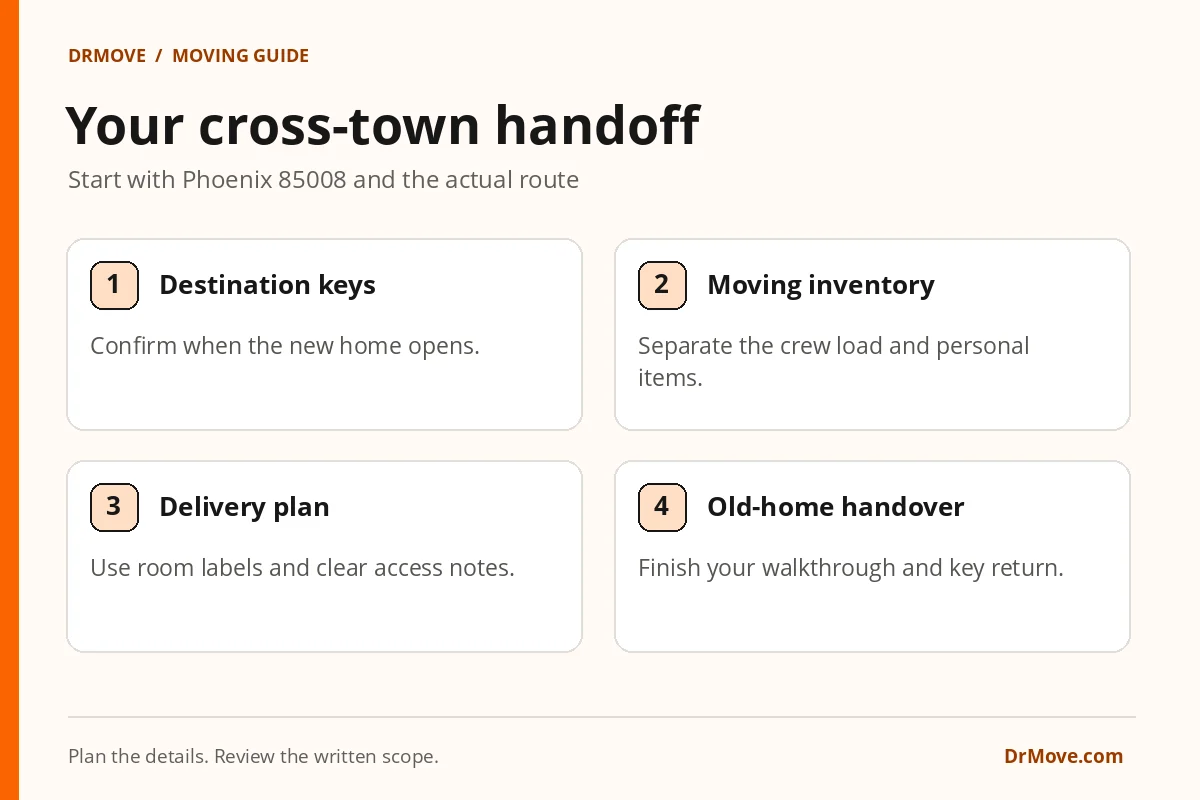
Confirm when you will have keys and permission to bring in furniture. A planned lease start or expected closing is not the same as verified physical access. If the handover remains uncertain, explain that before agreeing to a tightly timed move.
For an apartment or condo, ask about the approved moving entrance, elevator reservations, and loading windows. For a house, identify the usable entrance and likely truck position. Repeat this access review at the old property.
Create a simple sequence: collect keys, prepare the destination, load, travel, unload, then complete the old-home walkthrough. If two tasks need to happen simultaneously, assign another responsible person or adjust the schedule instead of assuming you can be everywhere.
Make a destination plan before packing everything
Measure the new rooms and decide which large pieces belong where. A sofa that suited your previous living room may block a doorway in the new layout. Finding that problem early gives you time to sell, donate, or reconsider the piece.
Use a rough room sketch with doors and major furniture. It does not need to be professionally drawn. The purpose is to identify obvious fit questions and help you direct unloading without repeatedly changing your mind.
Label boxes by the new room, especially if room names differ between properties. Office boxes should not become guest-room boxes simply because that was where they were stored before. Destination labels reduce the amount of reshuffling you do afterward.
Include the garage and patio in the main plan
It is easy to focus on indoor furniture and postpone the garage. That can leave shelves, tools, outdoor chairs, and exercise equipment until the final evening. Review those areas early enough to decide what moves and what needs separate arrangements.
Ask the mover about belongings with unusual preparation or handling requirements. Do not pack unidentified liquids, potentially restricted materials, or equipment with unresolved transport questions into ordinary boxes and hope they are acceptable.
Use the moving inventory checklist to record the full job. Remove items you are no longer moving before the written scope is finalized, and tell DrMove about additions before moving day.
Plan your own tasks around the moving appointment
The crew cannot make every household decision for you. Set aside time for cleaning, returning keys, redirecting deliveries, and collecting any belongings from separate locations. Decide which tasks must happen before loading and which can wait until after delivery.
If you need internet for work immediately, coordinate that setup separately. Carry the equipment and information you need to access your accounts. Do not assume your workday will continue normally while your desk and chair are being moved.
Make arrangements for pets and anyone who needs a quieter environment. The aim is to keep entrances clear and reduce competing demands on the person coordinating the move.
Check the route shortly before your date
Nearby addresses can still be connected by a route affected by roadwork or restrictions. Review the actual approach to both properties and tell the mover about a gate or entrance that differs from the navigation destination.
Use Arizona 511 travel alerts for current road information when planning. Share a relevant issue with the mover instead of treating a familiar drive as a guaranteed travel time.
Avoid scheduling another appointment immediately after an assumed arrival. Your plan should use the agreed moving window and leave room for your own unpacking and property responsibilities, rather than depending on a minute-by-minute prediction.
Review the written price before you commit
Compare the quote against your inventory and task list. Check the locations, access, requested materials, preparation services, and any additional stops. If you intend to transport certain items yourself, make sure the division is clear.
DrMove's binding price applies to the agreed move. If you later add another pickup, change the destination, or request more services, discuss the revision in advance. Review any updated scope and price before proceeding.
Read what a binding quote should include if you need help with that review. A useful price should describe the job you recognize, not a simplified version missing important work.
Keep the old home and new home organized
At the old property, designate a clearly marked area for belongings that stay with you. Keep keys, documents, chargers, and your first-night bag out of the loading inventory. Tell the crew about this area before work starts.
At the new property, have a plan for room placement and keep walking routes open. Start with the spaces you need to use immediately, such as the bedroom, bathroom, and a place to prepare food. You can organize decorative items later.
After delivery, check closets and storage spaces at the old address one final time. A local move can create a false sense that returning will always be easy, but access may end when you hand back the keys.
Use nearby access deliberately
If you can visit the new home before moving day, use the visit for preparation rather than a series of unplanned deliveries. Measure important spaces, confirm the entrance, and take notes for the room layout. Check that your keys and access instructions work.
Make a separate list for any belongings you carry during that visit. Remove them from the mover's current inventory only when the transport plan has actually changed and the change has been communicated. This prevents uncertainty about whether an item is already at the destination or still waiting to be moved.
If early access is unavailable, avoid building the schedule around an assumed visit. Ask the property contact to answer the essential access questions and share the confirmed information with the mover. A nearby destination is useful only when you can enter it under the agreed arrangements.
Questions about local Phoenix movers
Is a short-distance move always inexpensive?
The route is one part of the work. Inventory, stairs, loading distance, preparation, and requested services also matter. Request a quote for your actual job rather than budgeting only from the distance between properties.
Can I carry some belongings myself?
You can plan that division, but make it clear in the inventory and agreement. Consider your available time, suitable transportation, and access to both properties. Keep personal items and mover-handled belongings visibly separate.
Does the quote request book the appointment?
No. Confirm the acceptance and booking steps before relying on a date. Check the final moving confirmation against your key handover and any property reservations so all parts of the schedule agree.
Get your local moving plan started
A successful cross-town move comes from a complete inventory, confirmed access, and a workable division of responsibilities. Being close to the destination helps, but the preparation still matters.