
An apartment or condo move in Scottsdale needs a plan for the shared spaces between your front door and the moving vehicle. Elevators, gates, corridors, and loading reservations can be just as important as the furniture inside the unit. The earlier you confirm those details, the easier it is to arrange a workable appointment.
This guide helps you prepare for a Scottsdale apartment move with controlled access and a defined schedule. DrMove starts the quote online without an in-home sales estimator. Your binding price covers the inventory, services, and conditions described in the written agreement for your move.
Get the building's current moving instructions
Ask the manager or association contact for the instructions that apply to your unit. Find out whether moving requires a reservation, a designated entrance, common-area protection, or information from the moving provider. Avoid assuming that another resident's experience covers your appointment.
Obtain the available moving windows before making a final schedule. If the property allows only one reservation at a time, you need to coordinate that availability with the mover. Keep the instructions in writing when possible.
Repeat the same check at the destination. A confirmed departure window does not tell you when you can unload at the new building. Treat the two properties as connected parts of one plan.
Treat an elevator reservation as its own task
Ask which elevator can be used, how it is reserved, and who provides access on the day. Confirm whether the route includes additional doors, stairs, or corridors after leaving the elevator. A lift serving the building does not necessarily eliminate all handling questions.
If the building requests protective equipment or advance documentation, share those requirements with the mover. Confirm who is responsible for each step. Do not assume the company knows a property's internal process before you provide it.
Write down what happens if access is delayed or the reserved elevator becomes unavailable. Get the appropriate property contact and tell the mover promptly when a condition changes. Discuss an updated plan before proceeding with a different scope.
Check the furniture route, including the turns
Large furniture needs to pass through more than your unit door. Review the loading entrance, elevator opening, hallways, corners, and room entrances. Measure relevant pieces and openings where practical, especially when you already know there is a tight fit.
A sectional sofa, tall cabinet, or wide bed frame may need a particular preparation plan. Ask the mover whether disassembly is available and whether it is included in your requested services. Provide useful photos if asked, focusing on the item and access route.
Do not assume that a piece will fit because it entered the unit years ago. Renovations, changed entrances, or a different destination can create a new route. Raise known concerns before accepting the moving plan.
Explain parking and loading separately
Your assigned parking space may not be the approved moving area. Ask the property where the vehicle can load and how long it can remain there. Confirm any gate authorization, height restriction, or vehicle-access instruction relevant to the move.
Walk from the loading position to your unit and describe the actual route. Note a courtyard, long corridor, additional gate, or stairs. Those details help the mover understand the job rather than assuming the vehicle will stop beside your door.
Keep entry directions concise. A building name, correct entrance, contact person, and reservation window are more useful than a long message full of unrelated neighborhood information.
Inventory storage lockers and balcony items
Apartment belongings are not always inside the main rooms. Check any storage locker, garage area, bicycle storage, balcony, and shared cupboard that contains your property. Identify which locations require separate keys or access arrangements.
List furniture, boxes, rugs, shelving, and loose items. If the storage area contains belongings you no longer want, arrange their destination before finalizing the move. Do not leave the crew to decide what should be discarded.
Our moving inventory checklist can help you keep everything on one current list. Mark items that stay with you personally and make sure they remain outside the mover's loading inventory.
Pack for a timed appointment
When a property has a moving window, preparation needs to be complete before the window begins. Close and label containers, clear the furniture route, and finish the tasks you agreed to handle. Avoid leaving a kitchen full of loose belongings for arrival morning.
Use destination-room labels and brief contents descriptions. Keep heavy small items in manageable containers, and pack fragile belongings appropriately. If you want packing assistance, request it before the quote is finalized and confirm that the service is available for your move.
Set aside a personal bag with keys, chargers, documents, and essentials. Tell everyone helping that this bag stays with you. It should not disappear into the moving load while you are answering another question.
Coordinate security without exposing unnecessary information
Ask how the building authorizes the moving crew and vehicle. Share the necessary access instructions through the appropriate channel, but keep unrelated personal or account information out of general moving notes.
If an entrance requires you to meet the crew, plan to be available at the agreed time. If another person will handle access, make that arrangement with the property and mover before moving day. Do not assume a friend can authorize entry without checking.
Keep your property contact available in case the access system fails. A clear escalation contact is more useful than trying several unrelated codes while the loading window is running.
Prepare the new unit before the main delivery
If you have early access, check the layout and mark where large furniture belongs. Identify any doorway or room where placement could be difficult. A rough floor plan can help you direct unloading efficiently.
Check basic household setup such as utilities, lighting, and access to the bathroom. Confirm which services are arranged by the building and which need your own action. Handle those tasks separately from the moving quote.
Keep the first evening simple. Prioritize the bed, personal necessities, and a small set of kitchen items rather than expecting the entire apartment to be organized immediately after unloading.
Review the scope and confirmation together
Check the quote against the current inventory and building instructions. Verify both unit numbers, floors, loading locations, elevator windows, and any requested preparation services. Make sure separate storage areas are included where applicable.
Read what a binding moving quote should include and review your actual agreement. DrMove's binding price applies to the agreed inventory, services, and conditions. Changes need to be discussed before moving day.
Then confirm the booking status. A quote request, an elevator reservation, and a confirmed mover appointment are different pieces of the plan. Keep the final confirmations together and check that the timing works from both ends.
Avoid three common coordination mistakes
The first mistake is booking a mover before learning the building's restrictions. Find out the available windows early, then coordinate them with the provider rather than hoping they will overlap.
The second is assuming an elevator solves every furniture-access problem. The doors, corners, corridors, and final room entrances still matter. Share known fit concerns before agreeing to the job.
The third is leaving the destination unprepared. Keys, entry authorization, and basic room placement should not become unanswered questions after the truck has arrived. Assign those responsibilities ahead of time.
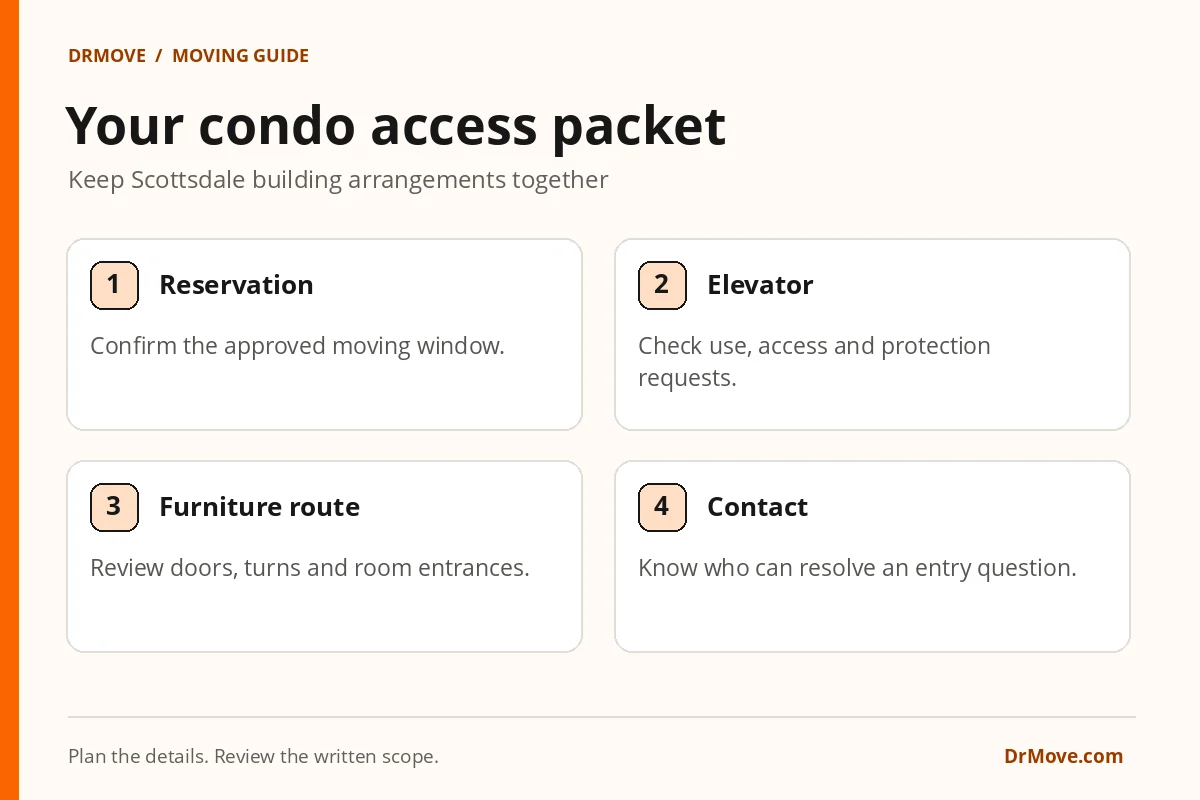
Keep a building-access packet
Put the current moving instructions, reservation confirmation, loading directions, and property contact together in one accessible place. Share the relevant information with the mover and anyone supervising the appointment. Avoid sending private account details that are unrelated to entry or the agreed job.
Review the packet shortly before the date. Confirm that the reservation still matches the mover's appointment and that the designated contact will be available. If one detail changes, update the shared information instead of leaving different people with different instructions.
This packet can be brief. Its value comes from being current and easy to use when someone needs an answer at the entrance.
Scottsdale apartment moving questions
Does every condo require an elevator reservation?
Requirements vary by property. Ask the manager or association for current instructions for your building. Provide those details to the mover rather than treating a general moving guide as the building's rulebook.
What if the elevator window changes after I request a quote?
Tell the mover promptly and coordinate the revised timing. If access conditions or the work change, review the updated plan and any revised written scope or price before moving day.
Can I begin without an estimator walking through the unit?
Yes. DrMove starts online so you can provide the inventory and property information without an in-home sales appointment. Complete details and a careful written review still matter before accepting the move.
Make the building part of your moving plan
A smooth Scottsdale apartment move accounts for shared access, personal belongings, and a realistic timeline. Gather the building instructions, prepare the inventory, and connect the reservations before committing to the date.