
Packing a kitchen takes more decisions than simply emptying cabinets into cartons. You need to decide what to use until the final evening, what to discard or give away, which items require careful wrapping and how to avoid opening ten boxes just to make breakfast after arrival. A sensible kitchen packing plan works backward from those everyday needs. It also gives you a realistic picture of how many cartons and what packing help your move may require.
This guide is for Phoenix households moving locally, including apartments, townhomes and houses near 85008 and neighboring Valley communities. It explains a practical sequence for packing the kitchen while keeping a small working setup available. It does not assume that your moving service includes packing, appliance preparation or transport of every pantry product. Confirm those responsibilities before you build your plan around them.
Planning a Phoenix-area move? Request your free online moving quote from DrMove. Share your inventory, locations and access details so the moving scope can be reviewed.
Decide who will pack before buying supplies
Start by separating three responsibilities: packing loose kitchen contents, preparing appliances and carrying the packed items. These can be different services. Ask what is included in your written moving scope and whether supplies, unpacking or specialty preparation are additional. A kitchen that you pack yourself may need a different schedule from one being packed by an agreed service.
Create a rough cabinet-by-cabinet list. Include dishes, glasses, cookware, small appliances, pantry shelves and any items stored above cabinets or below the sink. This first pass does not need individual counts of every utensil. Its purpose is to reveal the amount of work and identify things that need a special decision. Use the moving inventory checklist to connect your kitchen cartons with the rest of your household inventory.
Reduce the contents before you pack
Open each cabinet and sort items into keep, use before moving, donate where accepted and dispose of appropriately. Avoid paying for supplies and time to move items you already know you do not want. Duplicate gadgets, chipped serving pieces and containers without matching lids are good candidates for an honest decision before packing begins.
Do not treat a move as a reason to give away unsafe food or damaged equipment. Check the receiving organization’s rules before making a donation trip. For pantry items you are keeping, inspect closures and remove anything leaking or compromised. Set a realistic menu for the remaining days so you use some food without needing to buy a large fresh supply immediately before departure. Keep this process manageable by working one cabinet or shelf at a time.
Build a small last-use kitchen kit
Choose a limited set of everyday items to keep out until the final meals: a pan, a few plates or bowls, basic utensils, a cutting board and whatever you actually use to prepare simple food. Put the rest of the duplicates into the packing sequence. A small kit keeps your kitchen functional without leaving every drawer unfinished.
Plan how that kit will travel and where it will go at the new home. Keep it distinct from the general kitchen cartons. If you expect to eat a simple prepared meal on moving day, pack for that plan rather than keeping a full cooking setup available unnecessarily. Include a way to clean the few items you use. The last-use kit should become part of your arrival plan, so the final items packed do not become the hardest things to find.
Choose cartons you can handle comfortably
Use sturdy cartons in sound condition and close them appropriately. Kitchen belongings can become heavy quickly, particularly when dishes, canned food and cookware are combined. Smaller cartons are often easier to control for dense items. Avoid choosing a large box simply because it can hold everything from one cabinet.
Check the packaging manufacturer’s guidance and any requirements from your mover. Do not overfill cartons or leave them so loosely packed that contents move freely. Keep the finished weight reasonable for the agreed handling arrangements. The right carton is only part of the protection: individual wrapping, separation and cushioning still matter. If you are unsure how to pack a particular fragile item, ask about suitable professional packing before moving day instead of improvising at the loading area.
Pack dishes in small, organized groups
Clear a work surface and wrap individual dishes with appropriate clean packing material. Separate items so hard surfaces do not rub directly together. Place them securely within a suitably prepared carton, with cushioning and support around the packed group. Avoid allowing a stack of heavy dishes to press against a delicate serving piece.
Keep sets organized enough that unpacking is straightforward, but do not overload one carton to keep an entire collection together. Fill empty spaces with appropriate packing material and close the carton without forcing the lid down against its contents. Mark the box with its destination and an accurate contents description. A fragile label communicates the contents; it does not make up for poor packing. If your dishware has exceptional value or unusual construction, arrange packing guidance suited to that item.
Give glasses and mugs their own packing attention
Handle glasses, mugs and stemware as individual pieces rather than loose collections. Use appropriate wrapping and, where suitable, a divided carton designed for glassware. Protect handles and delicate sections from pressure. Do not wedge an unwrapped glass inside a mug just to save space or place heavy cookware above loosely packed drinking glasses.
Pack only what fits securely in the chosen container. Check that items do not shift against one another when the carton is handled normally. Keep a few everyday cups in your last-use kit so you do not reopen the glassware cartons after sealing them. For a detailed external packing reference, U-Haul publishes a kitchen packing guide. Use item-specific instructions where needed rather than assuming every material or shape should be packed the same way.
Planning a Phoenix-area move? Request your free online moving quote from DrMove. Share your inventory, locations and access details so the moving scope can be reviewed.
Keep cookware and sharp tools controlled
Nest cookware only when the pieces are suitable for it and protected from rubbing or scratching. Pack lids so they cannot slide loose and strike another item. Keep heavy pans separate from fragile glassware. If a handle or part is removable, follow the manufacturer’s instructions and place the small parts in a clearly identified packet.
Sharp kitchen tools need secure protection and clear identification. Use an appropriate blade guard or other suitable packing method, and arrange the tools so no exposed edge can cut through the packaging or injure someone unpacking it. Do not leave loose knives in a drawer organizer and assume the organizer will contain them during the move. Keep any everyday knife retained for the final meal under the same deliberate control when you pack the last-use kit.
Prepare small appliances individually
Empty and clean small appliances before packing them, allowing parts to dry as appropriate. Remove loose accessories and pack them with identification so you know which machine they belong to. Secure cords without creating stress on their connections. Check the manufacturer’s instructions for removable reservoirs, blades or other components that may require special handling.
Original packaging can be useful when it is available and still suitable, but check its condition rather than assuming age does not matter. Otherwise choose appropriate protective packaging for the appliance. Label the carton with the item and destination. Do not include a wet coffee maker or food residue in a sealed carton and leave the cleaning task for the new kitchen. Preparing these items in advance makes both packing and the first use after arrival easier.
Review pantry goods and liquids separately
Ask your mover which food, liquids and household products can be transported and under what conditions. Keep anything excluded out of the moving cartons. Do not assume an unopened container is automatically suitable for loading. Leaks can affect neighboring belongings, and the conditions of storage and transport matter for the items you choose to keep.
Plan separately for refrigerated and frozen food. Use an arrangement appropriate to the food and the time involved, and follow reliable food-safety guidance for handling and temperature control. Avoid packing perishable food into ordinary household cartons. In Phoenix, the time between leaving one kitchen and gaining access to another can include delays, so do not build the plan around a best-case drive alone. If you cannot maintain appropriate conditions, make a different plan for those items.
Treat large appliances as a separate service decision
A refrigerator, dishwasher or other major appliance is not simply another kitchen carton. Confirm whether it is part of the move and who is responsible for disconnection, preparation, transport and reconnection. Follow the manufacturer’s instructions and use a qualified service provider when the work requires one. Do not leave these responsibilities as an assumption between several people.
Give the mover accurate dimensions and access information for appliances included in the inventory. Identify narrow doors, stairs and other relevant route conditions in advance. If an appliance is staying with the old home, say so clearly and keep it out of the moving scope. For a wider discussion of service boundaries, read the packing responsibilities guide before accepting an arrangement.
Label for an easier first evening
Use clear destination labels and a box number on your kitchen cartons. Add a short contents description such as everyday dishes, baking tools or coffee equipment. Identify the small number of cartons you want to unpack first. When every box says “urgent,” the priority system stops helping.
At the destination, keep cartons out of the work area needed for appliance placement and essential access. Unpack the last-use kit and basic cleaning supplies first, then work through the kitchen by function. You do not need to organize every cabinet on the first evening. Making drinking water, a simple meal and the next morning’s routine manageable is a useful first target.
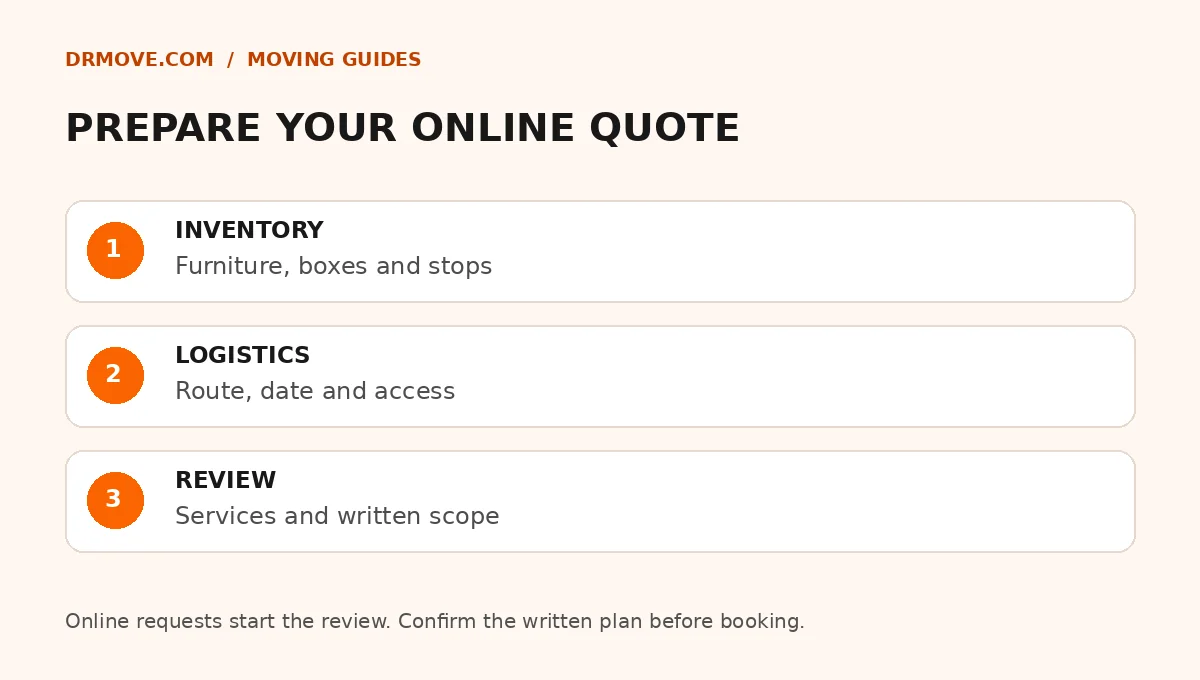
Before moving day, compare your final box estimate with the inventory you submitted. Let DrMove know about meaningful changes, added appliances or packing help you now need. A binding moving quote depends on the agreed written scope and conditions; review those details and any changes before accepting them. DrMove’s online process lets you start sharing your move information without first arranging an in-home estimator visit.
Planning a Phoenix-area move? Request your free online moving quote from DrMove. Share your inventory, locations and access details so the moving scope can be reviewed.