
A family move to or within Chandler involves more than furniture. You are also moving daily routines, work arrangements, school materials, pet supplies, and the items everyone needs to feel settled. The moving appointment works better when those household responsibilities have their own plan.
If you are comparing Chandler movers, this guide helps you organize preparation around real family needs. DrMove starts the quote online without an in-home sales estimator. The binding price covers the inventory, services, and conditions in your written agreement, with route eligibility and availability confirmed for the move you request.
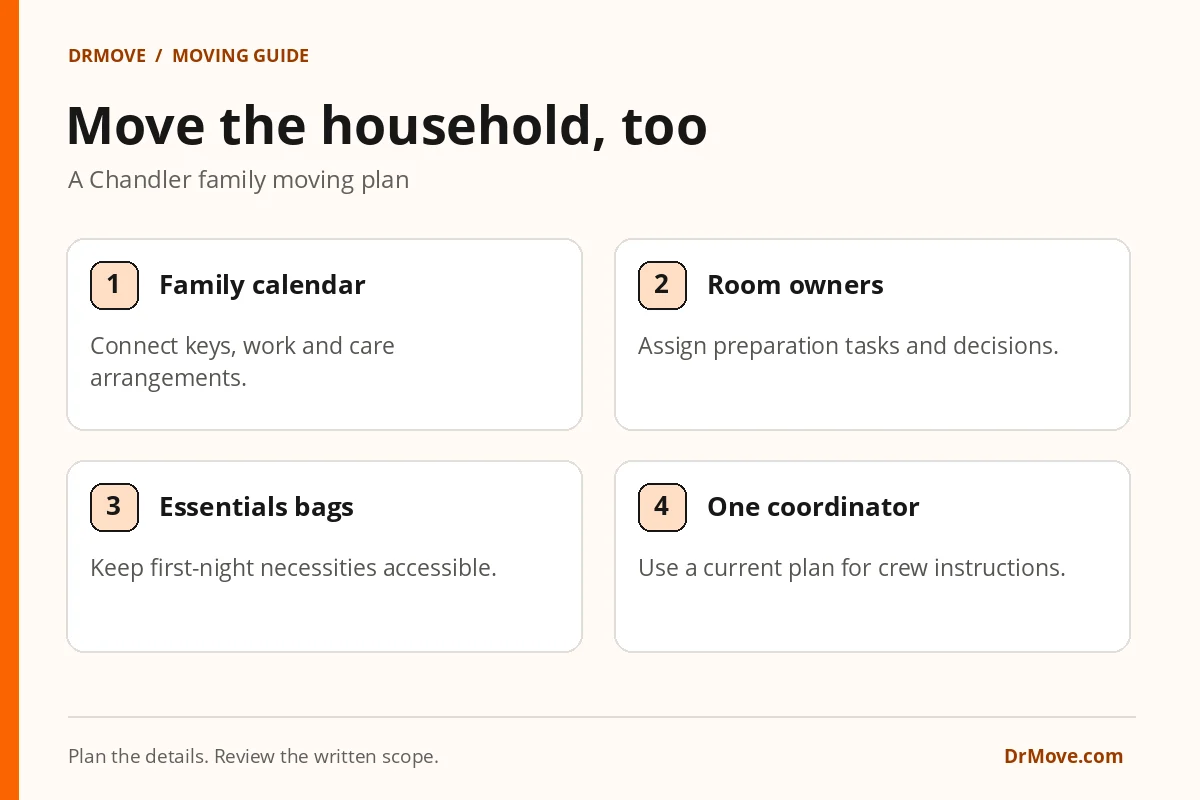
Create a family calendar before a packing calendar
Write down the confirmed key handover, old-property deadline, work commitments, and any school or care arrangements you need to manage. Then identify the time genuinely available for packing and the moving appointment. An ambitious box schedule cannot create hours that the household does not have.
Choose which commitments can move and which cannot. If one adult needs to work during part of the appointment, decide who will answer moving questions. If children or pets need supervision elsewhere, arrange that before the final week.
Keep uncertain dates marked as uncertain. A likely closing or expected handover should be discussed with the mover rather than treated as guaranteed access to the destination.
Give each room a preparation owner
Divide tasks by space or responsibility so everyone knows what to finish. One person might handle the kitchen inventory while another reviews the garage. The important point is that every area has a clear owner and deadline.
Keep the responsibilities realistic. Younger family members can help identify favorite belongings or choose what they need for the first night, while adults manage the moving scope and practical decisions. Avoid making the last evening the deadline for every room.
Use a short household checklist that shows done, in progress, and needs a decision. This helps distinguish actual preparation from tasks that have only been discussed.
Build an inventory that includes family equipment
List beds, dressers, tables, sofas, desks, and storage furniture. Then check sports gear, bicycles, toys, exercise equipment, outdoor belongings, and seasonal storage. A family's less-used items can occupy a substantial amount of space.
Decide what will move before packing it. Items that no longer fit the household or destination may need another plan. Complete donations or sales early enough that the final inventory reflects what remains.
Use our moving inventory checklist to organize the property room by room. Keep one current list so different family members do not provide the mover with inconsistent information.
Plan the children's rooms for the first evening
Decide where beds and essential furniture belong before delivery. Mark the rooms clearly and label containers by the destination room rather than the old arrangement. If siblings are changing rooms, use labels that cannot be confused.
Pack a personal bag for each family member with clothing, toiletries, chargers where needed, and familiar essentials. Keep those bags separate from the main load. A favorite book or comfort item is easier to find when it has a designated place.
You do not need every toy and decoration unpacked immediately. A usable sleeping space and access to everyday necessities can make the transition more manageable while the rest of the home is organized gradually.
Separate important records from the moving boxes
Keep keys, identification, important household documents, and essential account information accessible and secure. Decide who carries them. Do not include unrelated private paperwork in moving photos or general access notes.
If a school, childcare provider, or other organization needs updated information, check its own current process. Handle those arrangements separately from the moving appointment and allow time for the tasks you need to complete.
Create an address-update list for important accounts and deliveries. Mark each one when it is finished so the household does not rely on memory after the move.
Arrange a practical plan for pets
Decide where pets will be while doors are open and furniture is moving. Use a suitable supervised arrangement that keeps them away from loading routes. Tell the household what the plan is so nobody changes it casually during the appointment.
Keep pet essentials accessible rather than packing everything into the main load. Include the supplies you normally need for the first evening at the new property. Confirm destination access before bringing pets into a busy unloading environment.
The goal is to reduce competing responsibilities for the person coordinating the move. A clear pet plan helps that person answer the crew's questions without simultaneously managing an open door and a startled animal.
Check the access at both homes
Describe stairs, gates, elevators, driveways, and the likely loading position. For an apartment or condo, request the property's current moving instructions. For a house, identify known clearance or furniture-route concerns.
Repeat the check at the destination instead of assuming it is simpler than the old home. If the new property has a limited moving window or key handover time, share that information before the quote is finalized.
Use a simple room plan to guide delivery. Choose one household contact to make placement decisions so the crew is not receiving conflicting directions from several family members.
Coordinate utilities and working-from-home needs
Arrange service changes with the correct providers for the exact address. Keep utility setup, internet installation, and any property appointments on the family calendar. They are separate tasks from transportation and may have their own requirements.
The City of Chandler utility resource provides an official starting point for city-service questions. Verify the current process directly and check any services handled through your property.
If a family member needs to work soon after moving, plan an accessible workspace and essential equipment. Avoid scheduling a critical meeting on the assumption that the entire home will be unpacked immediately after unloading.
Review the services you want included
Identify packing, materials, furniture preparation, disassembly, and reassembly you want the mover to handle. Ask about availability and make sure accepted services are listed in the written scope. Do not assume a family move automatically includes every preparation task.
If you are packing yourself, set a realistic completion date before the appointment. Close and label containers, clear walking paths, and separate belongings that stay with you. Keep the responsibility list consistent with the quote.
Read our binding moving quote guide and review your actual documents. DrMove's binding price covers the agreed inventory, services, and conditions, so changes should be discussed before moving day.
Use a final family briefing
A day or two before the move, review who handles keys, pets, personal bags, property access, and communication with the crew. Confirm that the current inventory matches the belongings waiting to move.
Check the booking confirmation and any building reservations. A quote request is not a confirmed appointment, so ensure the acceptance steps have been completed before relying on the moving date.
After delivery, focus on essential rooms and basic routines. Keep the remaining unpacking tasks on a manageable list. The family does not need every container opened on the first evening to begin using the new home.
Keep one household command list
Use a short shared list for decisions that affect everyone: key collection, personal bags, pet arrangements, room labels, and the person supervising each part of the appointment. Keep it separate from the detailed furniture inventory so practical family responsibilities remain easy to find.
Mark tasks complete only when the arrangement is confirmed. A request for help with supervision is different from someone agreeing to provide it. An expected key time is different from a confirmed handover. Those distinctions help the household plan around real information.
Before the appointment, make sure each person knows their own role and where to direct questions. The list does not need to manage every moment of moving day. It should settle the responsibilities that would otherwise interrupt packing, access, and communication when several family members need attention at once.
Chandler family moving questions
Should every family member talk directly to the crew?
Choose one primary coordinator for routine instructions. Family members can direct questions through that person. Consistent information makes it easier to follow the inventory and room plan without conflicting placement decisions.
What if our inventory changes during packing?
Tell DrMove before moving day. Review any updated scope and price when the work changes. Keep the current written version accessible to the person supervising pickup and delivery.
Can we start without a home estimator visit?
Yes. DrMove starts online. Provide the household inventory and property details, resolve remaining questions, and review the written quote and booking terms before agreeing to your move.
Make the family plan support the moving plan
A clearer family move assigns both the furniture work and the household responsibilities. Gather the inventory, confirm access, and protect time for the people and routines that need attention during the transition.