
Sometimes the old home must be empty before the new one is ready. Other times you are downsizing and need some belongings delivered while others go to storage. In either situation, the moving plan becomes clearer when each location, inventory, and date has its own place in the schedule.
If you are researching Peoria movers, this guide explains how to coordinate a move involving a timing gap or separate storage arrangement. DrMove starts the quote online without an in-home sales estimator. Your binding price covers the inventory, route, services, and conditions in the written agreement, with availability confirmed for the specific work you request.
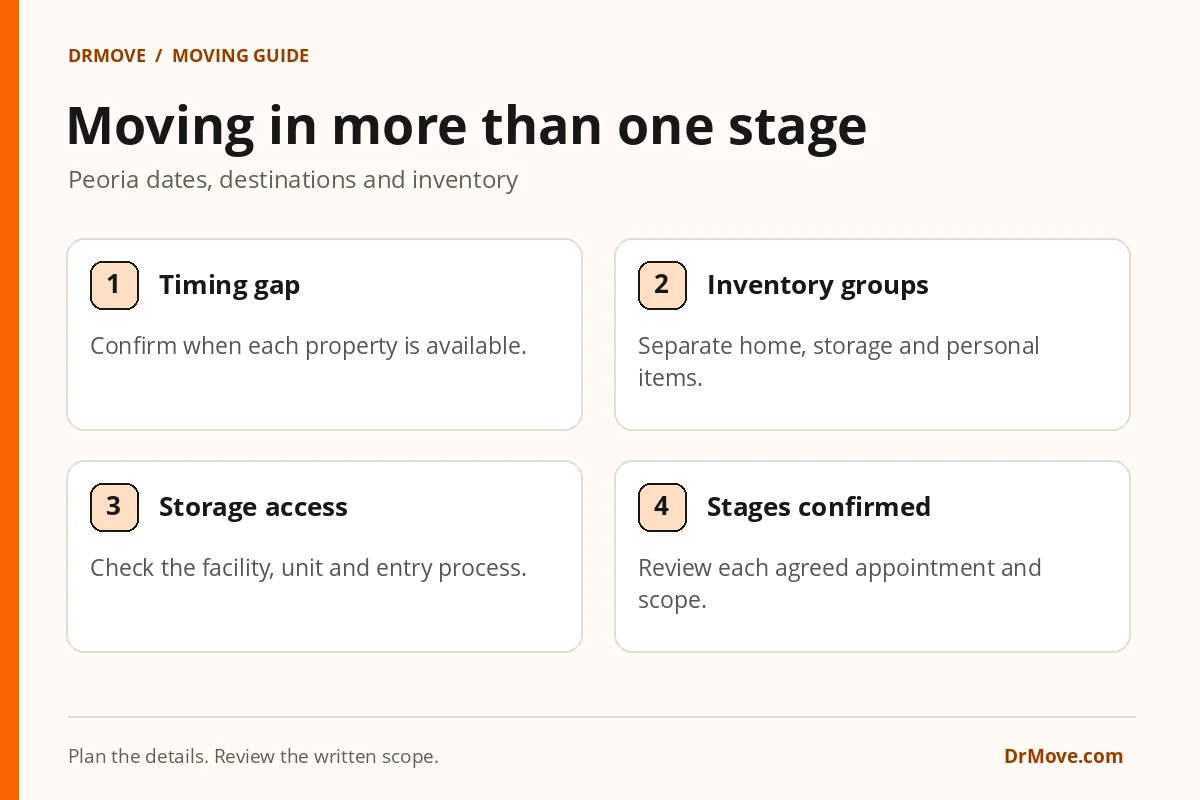
Start by identifying the timing gap
Write down when the old property must be empty and when you can actually enter the destination. If either date remains uncertain, label it clearly. A scheduled closing or expected key handover may still require confirmation before you can rely on it.
Decide where the household and belongings will be during any gap. Personal accommodation, storage, and transportation are connected decisions, but they may involve different providers. Identify who handles each arrangement rather than treating them as one assumed service.
Share the relevant dates with the mover. Ask which requested services and appointments are available before building the rest of your plan around a preferred moving day.
Create separate inventories for separate destinations
Divide belongings into clear groups: new home, storage, personal transport, and items leaving the household. If furniture will be collected later, record that as a separate stage. A single undifferentiated list makes it harder to plan where each piece belongs.
Use room names and short contents descriptions on containers. Add a destination code when some boxes go to storage and others go directly to the home. The label should be understandable without asking the same question for every container.
Use the moving inventory checklist to organize the property. Then add the destination column that makes your staged move different from an ordinary one-pickup, one-delivery job.
Evaluate the storage location before the move
If you are arranging storage, confirm the unit address, access hours, entry process, floor, elevator or loading arrangement, and any facility instructions. Ask the storage provider about the conditions and suitability of the unit for the belongings you intend to store.
Consider how often you will need to reach the items and whether some containers must remain accessible. Do not place essential paperwork or first-week necessities deep inside a load that will be difficult to retrieve.
Share the relevant facility details with the mover. A storage address should be treated as a real work location with its own access conditions, not simply a note added beside the main destination.
Plan the order of loading and delivery
Tell the provider which items go to each stop and ask how the route should be organized. The order matters when belongings for different destinations share the same moving appointment. A clear plan can reduce confusion about what is unloaded where.
Do not independently promise that a storage stop will take only a few minutes. Describe the inventory and access so the mover can review the actual work. Include stairs, elevators, gates, and walking distances where relevant.
Keep the final route in writing. If you change the stop order or destination later, tell DrMove before moving day and review any updated scope and price needed for the revised plan.
Decide whether you need one move or multiple stages
An initial pickup into storage and a later delivery into the new home may require separate appointments and agreements. Ask the provider how your requested arrangement would work. Do not assume that one quote automatically covers a future trip whose date or destination is not yet known.
For each stage, identify the inventory, locations, access, services, and timing. Keep the documents labeled so you know which work and price belong to which appointment. The same sofa may appear in two stages without the stages being the same job.
DrMove will review the actual request and availability. Confirm the arrangement before making connected commitments with a property or storage provider.
Prepare an essentials group that stays accessible
Pack clothing, toiletries, chargers, important documents, keys, and the household items you need during the transition separately. If you will be between homes, think about the whole gap rather than only the first evening.
Keep these essentials outside the mover's main inventory when you intend to carry them yourself. Tell everyone helping which bags or containers stay with you. Clear separation is more reliable than trying to remember exceptions during loading.
If you need work equipment during the gap, plan it deliberately. A desk, monitor, or document box placed in storage may not be convenient to retrieve later simply because the facility is nearby.
Pack according to the agreed plan
Ask about preparation requirements for belongings going into storage and about any packing services you want included. Confirm who supplies materials and who handles furniture preparation. Availability and responsibilities should be clear before the appointment.
Label containers on more than one visible side where practical. Use a simple inventory record so you can find categories later without opening every box. Keep related hardware and instructions associated with the correct furniture.
Ask the storage provider about items it does not accept and ask the mover about transport restrictions or special handling. Resolve those questions before packing an uncertain item into an otherwise ordinary container.
Check access at the Peoria property too
Storage planning should not distract from the old and new homes. Describe the floors, stairs, elevators, loading positions, gates, and known furniture-route concerns at each address. Obtain current building instructions where applicable.
Use the actual addresses for route review. DrMove's local focus starts around Phoenix 85008 and nearby Valley communities, but your specific locations, services, and date still need confirmation.
If a destination changes during the home search, update the request. Different access and route conditions need review before the final written plan can accurately describe the move.
Compare staged moving quotes carefully
Give each provider the same destinations, inventory groups, and service requests. One offer may cover only the initial storage delivery while another includes a later move. Those totals should not be treated as equivalent without checking the scope.
Ask how dates, changes, and separate stages are documented. Review payment, cancellation, and rescheduling terms for each agreed appointment. Keep the household's separate accommodation and storage costs outside the mover's service total.
Our binding moving quote guide explains the main review points. DrMove's binding price covers the agreed inventory, services, and conditions, so changes should be discussed before moving day.
Create a handoff checklist for each stage
Before loading, identify which inventory group is moving and where it is going. Confirm who has access to the destination and who will direct placement. If another person supervises a stage, give them the current documents and labels.
At storage, keep a usable record of what was delivered and how it is grouped. Follow the facility's instructions for the unit and access. At the final home, use a room plan to guide placement rather than unpacking the entire inventory into one room.
Review completed work with the provider at the relevant appointment. Then update your household checklist so the next stage starts from the belongings' actual location and current condition.
Keep an accessible storage index
Create a simple list of container labels and the broad categories inside them. Mark the belongings you may need before the final home delivery. Plan their placement with the relevant provider so you are not depending on an unplanned search through the entire unit later.
Keep the index with your household records rather than leaving its only copy inside storage. Update it when you retrieve or add belongings. The record should describe what is actually there now, not what was originally intended to go there.
This is especially useful when the timing gap extends or different people handle the stages. A current index gives the next appointment a clearer starting inventory.
Peoria moving and storage questions
Does a moving quote automatically include storage?
Only the services stated in the agreement are included. Explain the arrangement you need and confirm availability, providers, locations, and responsibilities before relying on storage or a later delivery.
Can I include an existing storage unit as a pickup?
Include its address, access, inventory, and preferred date in the request. DrMove will review the actual route and available services. Treat it as a separate stop with its own conditions.
What if I do not know the final moving date yet?
State that uncertainty clearly. Discuss the available planning options and booking terms. Do not assume an unknown future appointment is confirmed by an initial quote request.
Give each location and date its own clear role
A staged move becomes easier to understand when inventory groups, stops, and appointments are documented separately and connected in one household plan. Resolve the access and timing questions before the first load leaves the property.