
A useful 30-day moving checklist gives every decision a place on the calendar. It connects the date you can enter your new home, the date you must leave the old one, the belongings being moved and the work you want a provider to perform. For a Phoenix-area move, start with those facts before buying a stack of boxes or treating a quote request as a reservation.
This schedule is a practical planning example, not a promise that every household needs exactly one month. If you have less time, keep the same order: secure access, describe the move, confirm the written arrangement, then pack to match it. DrMove lets you start that conversation online without inviting an in-home sales estimator into your house.
Start my free online moving quote
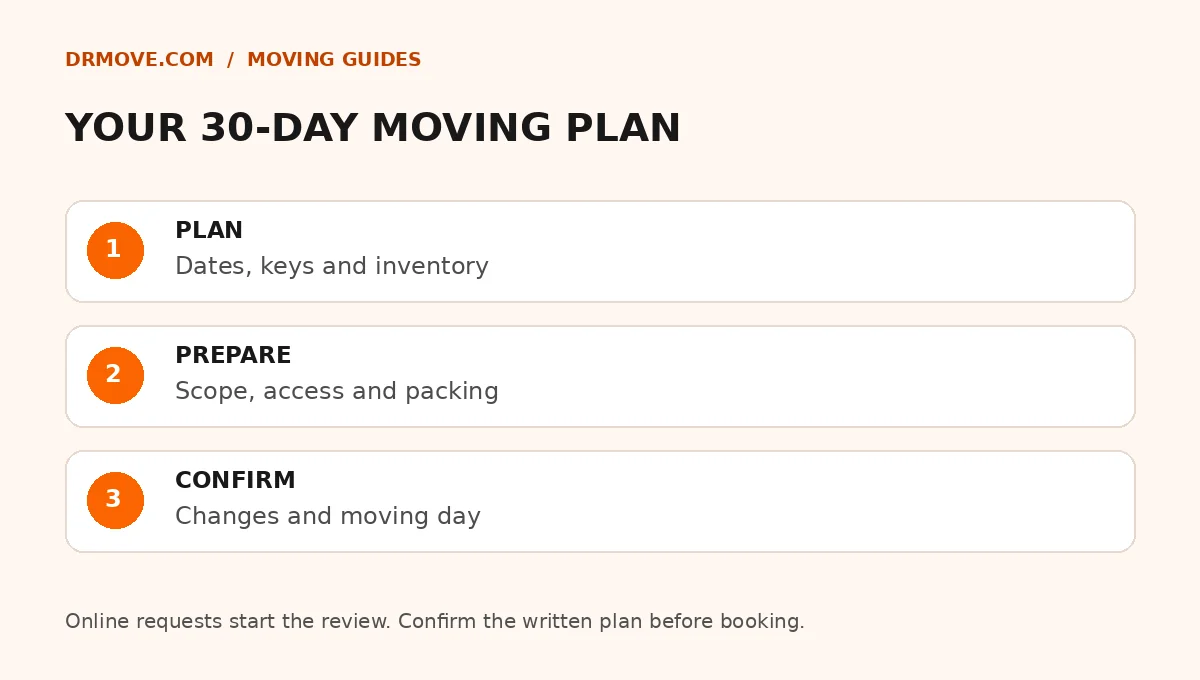
Days 30–25: establish the dates and responsibilities
Write down when you expect to receive keys, when the destination will actually be available for furniture and when the current property must be empty. These are different milestones. A lease start date, closing appointment or cleaning appointment should not be treated as confirmation that a truck can unload at that exact moment. Ask the responsible property contact what is confirmed and what is still conditional.
Choose one household coordinator to maintain the moving plan. That person can collect answers, update the inventory and keep the latest written quote where the household can find it. If relatives or roommates are moving separately, decide which belongings belong to each move. Establishing ownership now is easier than resolving it while someone is carrying a dresser toward the truck.
Create a simple worksheet with columns for task, responsible person, deadline and confirmation. Record building access, key handoff, packing help, storage access and utility arrangements. A task is complete when the needed answer is confirmed, rather than when a message has merely been sent. Keep unanswered questions visible so nobody mistakes an assumption for a finished arrangement.
Days 24–21: build the first complete inventory
Walk through every room and list the furniture and other items you intend to move. Add the garage, patio, balcony, shed and any rented storage space as separate areas. Include pieces that are easy to overlook, such as shelving, mirrors, exercise equipment, outdoor tables and boxed belongings above a closet. Mark items that are being sold, donated or carried separately.
Describe large pieces in a way another person can understand. A sectional sofa with several sections is different from one small couch. Record approximate dimensions where size affects the route through doors or stairs. Note unusual weight or handling concerns and ask the provider how those items should be assessed. Do not assume an online form automatically accepts every specialty item.
Use the room-by-room moving inventory checklist for the detailed listing process. This 30-day schedule tells you when to complete the work; the inventory guide helps you describe what is moving. Keep one current version so every quote comparison uses the same belongings, locations, access conditions and requested services.
Days 20–17: compare written scopes and confirm the next step
Submit your inventory, pickup and delivery locations, preferred date and access information together. Identify packing, furniture preparation, extra stops and any work that needs clarification. If you are comparing providers, send the same information to each one. A lower number is difficult to evaluate when it excludes work that another quote includes.
Before accepting anything, read who will provide the service, what is included, what remains excluded and how a change is handled. Confirm the appointment terms, payment terms and cancellation or rescheduling process in the actual written agreement. Save the accepted version. The binding moving quote guide explains the importance of checking the agreed inventory and conditions.
The current DrMove form starts a request for review. It does not itself issue a binding price, take a payment or reserve a crew. Wait for a written quote and booking confirmation before describing the move as booked. For moves crossing state lines, consult the FMCSA moving checklist and verify the actual provider through the relevant official resources; do not assume every local planning rule is an interstate rule.
Days 16–13: resolve property access at both ends
Ask each building or property contact where a moving vehicle may load, whether an elevator must be reserved and whether the proposed time is permitted. Record stairs, walking distance from the loading point, narrow turns and any entrance that cannot be used. A short trip across Phoenix can still involve a complicated furniture route at either end.
For a house, check the usable driveway and the path from the vehicle to the front door. For an apartment, confirm the floor, elevator access and any separate loading entrance. Do not block a street, fire route or neighbor’s access on the assumption that moving day creates an exception. If permission remains uncertain, tell the provider before the appointment is confirmed.
Check the destination independently rather than copying the pickup notes. Make sure the person meeting the move has the keys and can identify the rooms. If a storage stop is involved, include its hours and loading arrangements in the itinerary. Share gate credentials only through the agreed private arrangement, not in a public checklist or a general social-media post.
Start my free online moving quote
Days 12–9: pack by destination and separate essentials
Pack belongings you can do without first, grouping boxes by destination room. Label the room and a useful description on more than one side so the label remains visible when boxes are stacked. Keep heavy contents in manageable containers and ask about any packing requirements that apply to fragile or unusual belongings. Do not assume packing materials or labor are included unless the scope says so.
Create a separate essentials group for the first night: everyday clothing, toiletries, chargers, basic bedding, household paperwork and items you will need before the boxes are unpacked. Decide who will carry those items and make that decision visible to everyone helping. Keep irreplaceable documents and personal necessities under your own control using an appropriate arrangement.
Keep a short list of items still in daily use. This prevents them from disappearing from the inventory just because they are packed later. Record any item that changes destination or leaves the move through a sale or donation. If the scope changes, send the update and wait for confirmation rather than assuming a different load will be handled at the old agreed price.
Days 8–5: arrange services and check the plan against reality
Confirm your own utility and account arrangements directly with each provider. Water, electricity, internet and building services can involve different contacts. The City of Phoenix moving resources include city-service information, but a Phoenix mailing address does not by itself establish which company supplies every service. Check the exact address before scheduling a start or stop.
Use the official USPS forwarding page for mail-forwarding information and update important organizations directly. Do not rely on forwarding as a substitute for updating every account. Keep confirmations in the same moving folder as your quote, appointment details and property instructions. This makes a missing arrangement easier to spot before the last few days.
Walk through the home again with your inventory. Look behind doors, inside outdoor storage and in areas someone else packed. Compare the actual packing progress with the agreed services: if you planned to pack everything yourself but several rooms remain untouched, tell the provider while there is still time to discuss options. Extra work should be reviewed rather than assumed.
Days 4–2: confirm changes, people and communications
Check the latest written appointment information and the contact method you will use during the move. Confirm who can authorize a change and who will meet the provider at delivery. If the person who arranged the move will be unavailable, make the handoff explicit. Do not leave another household member to infer what was included from an old message or a verbal summary.
Review weather and road conditions for the actual date. For Arizona routes, AZ511 provides current travel information; check again closer to departure. Weather or access concerns may require a discussion about timing. Keep a realistic fallback for children, pets, food and the first night if the schedule changes, without assuming the provider includes those arrangements.
Finish room labels and make the keep-with-you group easy to distinguish. Put a clear note on anything excluded from loading. Photograph useful condition and identification details for your own records without posting private household information online. Check the refrigerator, cupboards, charging outlets and bathroom shelves: these are easy places to leave everyday items behind.
Day 1 and moving day: follow the agreed plan
Before loading starts, walk through the inventory, exclusions, access route and any changes with the responsible provider contact. Ask for clarification if the written information does not match the proposed work. Keep the relevant documents available and review completed paperwork before agreeing to it. A busy driveway is not a good reason to leave an important scope question unanswered.
At delivery, direct boxes to their labeled rooms and check the home before everyone leaves. Keep a record of any concern through the provider’s stated process. Confirm that keys, personal essentials and the first-night boxes are with you. Once the loading activity has ended, check the old property’s remaining rooms and follow the agreed key-return instructions.
You do not need a perfect moving calendar. You need one current plan, clear responsibilities and timely updates when the facts change. For local logistics, explore Phoenix moving information or Tempe moving information. For the scheduling decision itself, use our guide to when to book Phoenix movers. Start your DrMove request with the details you already know and identify anything still awaiting confirmation.