
A dining room can contain several moving jobs hidden inside one familiar label. The table may have removable leaves, the cabinet may contain glass shelves, and the chairs may be split between the dining area and another room. When requesting Phoenix movers, describe those parts separately so the moving company can assess the furniture, packing, access, and destination setup you actually need.
This guide concentrates on dining-room furniture and its components. It does not replace the separate task of packing dishes or assume specialist handling is included. Start with the Phoenix movers page for your household route, then add this room-specific information to the written moving request.
List the furniture and its components separately
Write a short furniture list before you start emptying cabinets. Include the table, every chair, benches, buffet, china cabinet, display cabinet, serving cart, and any separate shelving. Count chairs wherever they are currently stored. A table described as seating eight does not tell the provider whether you own six, eight, or twelve chairs.
Give each substantial piece a recognizable name that you will also use at delivery. Distinguish the buffet from the tall display cabinet rather than calling both a hutch. If a cabinet consists of a base and an upper section, say that and explain how the sections are currently arranged. Do not separate them merely to confirm a guess.
List stored table leaves, extension pieces, removable shelves, cushions, and other components alongside the furniture they belong to. Identify where they are now and where they should go. Your household inventory should represent the complete group without treating several loose components as one ready-to-carry object.
Identify what must come out of cabinets
Review each drawer, cupboard, and display area. Decide which contents you will pack and whether you are requesting any packing service. Furniture transportation and packing fragile contents are separate responsibilities. A china cabinet on the inventory does not establish that the dishes inside it will be packed by the moving crew.
Ask the provider what preparation it requires for the particular cabinet. This includes contents, removable shelves, loose trays, and other parts that could need separate attention. Follow the accepted instructions rather than assuming a cabinet can travel full because it has doors, or emptying only the most visible shelf and leaving the drawers untouched.
Count the containers created when the furniture is emptied. Keep those cartons in the shipment inventory and label their destination clearly. If you already requested a quote while the contents were still unpacked, update the quantities and packing responsibilities. The final written scope should reflect both the furniture and the contents you actually intend to move.
Find the table’s product information
Look for the manufacturer’s instructions, purchase information, or model identification before deciding whether the table should be disassembled. Construction varies, and a removable-looking part is not necessarily intended to be detached for every move. Share useful product information with the provider and ask what it needs to assess the actual piece.
Record whether the top extends, whether leaves are stored inside the table, and whether you have separate leaves elsewhere. Explain any mechanism that is damaged or unreliable without forcing it to operate for a photograph. A factual description of the current condition is more useful than a general assurance that the furniture is sturdy.
If preparation or disassembly is needed, assign the work before moving day. Confirm who performs it, when the piece will be ready, and what destination reassembly is accepted. Do not assume that carrying furniture includes every assembly task. Keep separately arranged help on its own confirmed schedule so the moving appointment is not waiting on unfinished preparation.
Review glass, stone, and delicate features
Identify glass doors, glass shelves, mirrors, stone tops, decorative projections, and other features the provider should review. Include dimensions and product information where available. The words dining table or display cabinet describe the item’s use; they do not fully describe its materials, weight, construction, or preparation requirements.
Ask what packing or protection is accepted for the specific item and who supplies the materials. If you are preparing parts yourself, confirm the requirements before buying packaging or dismantling the furniture. If specialist preparation is needed, establish that arrangement explicitly rather than assuming that all delicate components are covered by a general household service.
Describe existing cracks, loose joints, worn hardware, or unstable sections. Do not hide a concern under a cover or attempt an unfamiliar repair to make the item appear ready. Let the provider decide what information is needed for acceptance and keep any unresolved issue visible until you have a clear preparation and handling plan.
Measure the full route, not just the dining doorway
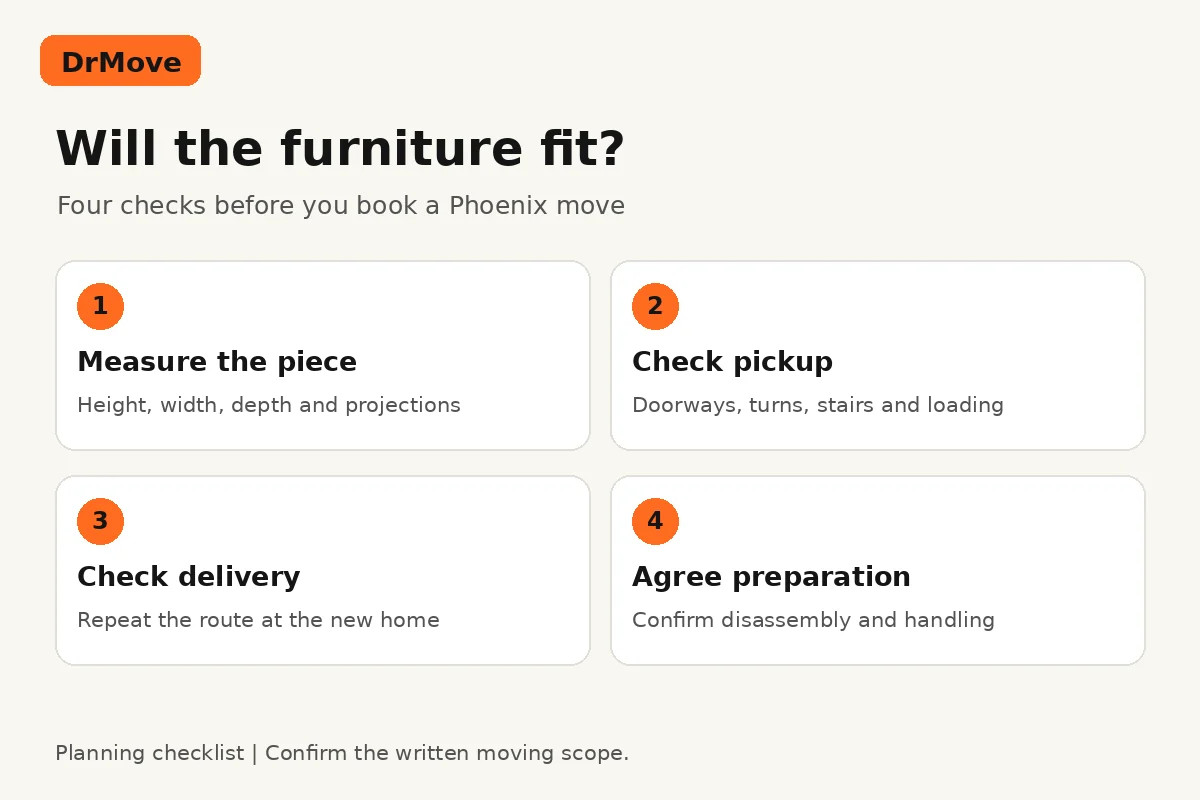
Record the relevant furniture dimensions and the clearances along the intended route. Include turns, stairs, hallway corners, gates, and the loading position. A cabinet fitting through its room’s doorway does not establish that it can turn through the next hall or reach the vehicle through the entrance you expect to use.
Check the destination route with the same care. A smaller dining room may still have an easier entrance, while a large room may sit beyond a difficult turn. Use our furniture measurement guide to organize the information, then let the provider assess the carrying method and any additional details it needs.
If the route crosses shared areas, ask the property contact which entrance and loading location are permitted. Report confirmed reservations or restrictions instead of guessing from a neighboring building’s rules. Keep the path clear when preparing the home; furniture measurements are less useful if cartons, loose rugs, or other belongings block the route on moving day.
Keep hardware and leaves tied to the correct piece
Choose a clear way to identify accepted removable parts and hardware. A labeled parts container can identify which table or cabinet it belongs to, but confirm how it should be packed and who retains it. Avoid mixing unrelated furniture hardware into one unmarked bag simply because it is all leaving the same room.
Keep table leaves with the corresponding product notes, even if they are stored in a bedroom closet rather than the dining room. Record their destination and any packaging responsibility. If you own several similar tables, use matching item identifiers so an extension piece is not separated from the furniture it is meant to fit.
Assign the handoff of keys, shelf supports, adjustable feet, and other small components where relevant. Do not tape anything to a delicate finish without an accepted method. The purpose of the parts plan is to preserve identification and responsibility; it is not a substitute for the manufacturer’s instructions or the provider’s preparation requirements.
Decide where the furniture belongs before delivery
Sketch a simple destination layout using the actual room dimensions. Consider the table’s everyday configuration and the space needed to use chairs and open cabinet doors. A drawing does not need to be polished to help the household decide whether the large pieces should enter the room or go to a different approved area.
Tell the provider which room receives each item and what placement work is included. If a cabinet is going into temporary storage or another part of the home, state that before delivery. Avoid treating several possible locations as interchangeable after unloading begins, particularly when the additional movement changes the work you described.
Check the destination readiness for accepted reassembly. Make sure the responsible person has the instructions and identified parts, and distinguish reassembly from installation, anchoring, electrical work, or adjustments outside the agreed service. Do not use a furniture delivery appointment as the assumed start time for unrelated trades that have not confirmed their own work.
Prepare for a partial dining-room move
If some furniture stays, mark the boundary clearly. Perhaps the table is moving while a cabinet remains, or only four of eight chairs belong to your household. Use the inventory and physical separation together so the crew is not expected to infer ownership from furniture style, placement, or the room in which an item is sitting.
Coordinate any donation, sale, return, or pickup by another person as a separate arrangement unless the mover has accepted that stop or task. An item that is not on the moving shipment still occupies the property until someone removes it. Keep that timing connected to your property handover without adding unapproved work to the crew’s day.
Before loading, have the authorized household contact walk through the dining area and confirm the current plan. Report changes in quantities, destinations, or preparation promptly. A quick review of a clear list is more effective than revisiting an unresolved household decision while the furniture is already being moved through a shared entrance.
Describe the dining room in your online quote
DrMove’s AI-powered online binding-quote approach starts with the inventory, route, services, and access conditions you describe. There is no in-home sales estimator appointment. Include dining furniture, separate components, packed contents, and any requested preparation so the online request represents the room’s actual work rather than only its name.
The binding price covers the agreed inventory, services, and conditions in your written agreement. Review the dining-room section with the complete household scope. If you add chairs, request packing, change the destination, or discover different access, tell DrMove and review any revised written scope and price before relying on the original arrangement.
A free quote request does not reserve a truck or take a payment. Confirm availability, the written quote, acceptance steps, and booking terms before treating the appointment as secured. Keep the accepted version available to the person supervising the move so preparation and delivery instructions follow the same arrangement you reviewed.
Make a final dining-room readiness pass
Check the furniture list against the actual room, closets holding table leaves, and cartons of removed contents. Confirm that assigned preparation is complete, parts are identified, and belongings staying behind are clearly separated. Tell the provider about anything that remains different from the accepted description before it affects the loading work.
At delivery, use the item names and room plan to guide placement. Keep the identified components available for accepted reassembly and follow the provider’s normal completion process. A dining-room move is easier to review when the table, chairs, cabinet contents, preparation, and destination instructions are all specific enough to be understood together.