
A home music room can contain ordinary furniture, delicate instruments, electronic equipment and a surprising number of small accessories. Describing it as one bedroom of belongings leaves important questions unanswered. The moving company needs to understand which items are included, what preparation is required and whether any piece needs specialist review before the service can be arranged.
This guide helps you prepare a home music room when comparing Scottsdale movers. It focuses on the inventory and handoff rather than teaching instrument repair, tuning or technical equipment work. Follow manufacturer instructions and seek an appropriate specialist for questions about an individual instrument or device. The goal is to give the moving provider a useful description of the room and make the first setup at the destination more organized.
Planning your Scottsdale move? Request a free online moving quote from DrMove. Share your inventory, locations and access details for review, and confirm availability and written terms before booking.
Separate furniture, instruments and electronics
Begin with three lists. Put desks, seating, shelves and other ordinary furniture on one. Put instruments and their cases on another. Use the third for recording or listening equipment and accessories. A cabinet and the amplifier sitting beside it may need different preparation, even though both occupy the same corner of the room.
Give each substantial item a recognizable description. Include approximate dimensions where useful and identify any particularly heavy, delicate or unusual piece for review. Do not assume every Scottsdale moving company provides the same instrument-handling service. Ask what can be considered within the proposed arrangement and what may require a separate specialist. A detailed room inventory makes those conversations possible before moving day.
Decide which items need specialist attention
Tell the provider about pianos, large instruments or other pieces requiring individual assessment. Ask about service availability and preparation rather than assuming standard furniture handling is appropriate. If the mover requests information or a specialist recommends a particular process, resolve that before the appointment is accepted.
Keep technical decisions with the appropriate people. Do not attempt a repair or substantial disassembly merely because it appears to make an item easier to move. Follow manufacturer instructions for equipment and use qualified help when needed. The household can provide access, descriptions and existing documentation; the service provider or specialist should explain the work they are willing and equipped to undertake. Keep that distinction clear in the written scope.
Photograph the working setup before disconnecting it
Take useful reference photographs of cable connections, labeled devices and the arrangement you intend to recreate. Keep the images associated with the equipment they show. A close-up of a connection without context may be less helpful later than a wider image with a clear item name.
These photos support organization; they do not replace technical instructions or establish that a device is safe to disconnect in a particular way. Follow the equipment’s guidance and use suitable assistance for unfamiliar work. If software, licenses or personal recordings are involved, manage those separately from the physical shipment. Avoid exposing passwords or private account details in visible labels or photographs shared for ordinary moving logistics.
Label cables by their destination device
Create a small labeling system before collecting cords into cartons. Identify the device and the relevant connection in a way you will understand after the room has been dismantled. Keep compatible accessories with the correct item when appropriate, using packaging suited to the equipment and its instructions.
Avoid one loose carton of unidentified cables, adapters and mounting parts. Group items into clearly marked packets or containers so unpacking is a sequence of identifiable tasks. Keep sharp or heavy components from contacting delicate accessories. Tell the moving company if any container requires specific review. Good labels reduce setup confusion, but they are only one part of suitable packing and do not make loose contents secure by themselves.
Review cases and packaging before relying on them
Inspect existing cases and original packaging for condition and suitability. Ask the manufacturer or a knowledgeable specialist about an item whose packaging needs are uncertain. A case intended for one use should not automatically be assumed adequate for every transport arrangement.
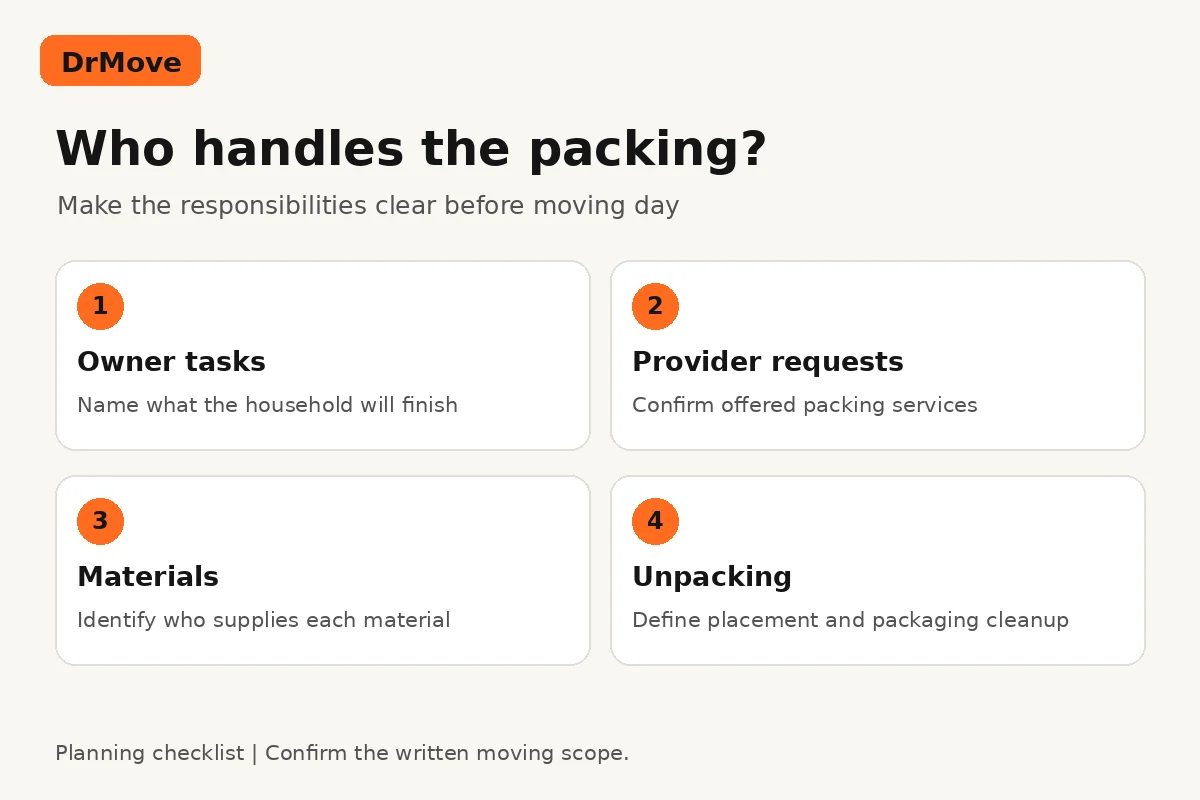
Identify whether packing materials and packing work are included in the moving service you are considering. If you want the provider to pack particular items, request that work explicitly and ask what information they need. If you are responsible for packing, confirm their preparation requirements before closing cartons. DrMove’s packing responsibility guide can help organize this division of tasks without treating all music-room contents as a single generic packing job.
Planning your Scottsdale move? Request a free online moving quote from DrMove. Share your inventory, locations and access details for review, and confirm availability and written terms before booking.
Include stands, shelves and overlooked accessories
Check under desks, behind shelving and inside equipment furniture. Microphone stands, music stands, pedals, mounts and small hardware can easily be omitted when the inventory concentrates on the most valuable items. List larger accessories individually where useful and group small contents into identifiable cartons.
Decide what should remain with you and what belongs in the agreed shipment. Keep excluded items separate and tell the moving-day contact which belongings are staying behind. If some equipment belongs to someone else, settle the authorized instructions before requesting pickup. The moving crew should not need to decide ownership or interpret separate conversations about which items were borrowed, sold or included in the move.
Check access for the room’s largest pieces
Survey both properties from the approved stopping areas to the destination rooms. Include relevant doorways, turns, stairs and other carrying conditions. Ask the mover to review substantial items rather than promising they will fit because a smaller device used the same route previously.
Pay attention to furniture assembled inside the room. A desk or shelving unit may need preparation before it can leave intact. Clarify who will do that work and whether reassembly is included at delivery. Keep hardware identified with its furniture. Describe any required wall removal or technical installation as a separate question rather than assuming the physical moving service includes altering the property or reconnecting a studio setup.
Plan the destination around function first
Choose where the main furniture and equipment will go before unloading. Leave space for ordinary access and the setup work that will follow. If the new room is smaller or has a different layout, identify which pieces have confirmed places and which still need a household decision.
Do not ask the mover to design the music room. Give clear placement directions for the work that has been accepted, and arrange technical setup separately where needed. A basic sketch can distinguish the desk wall, equipment storage and instrument area without pretending to solve acoustics or electrical questions. Keep those technical decisions with appropriate guidance, especially when an installation or connection is outside your knowledge.
Compare Scottsdale moving companies with the same equipment list
Provide each company the same confirmed inventory and access information. Ask which pieces can be included and whether the requested packing or specialist work is available. Review what the written offer actually covers rather than choosing by a headline number alone.
The binding moving quote guide explains why the agreed inventory and services matter. A music room with several substantial devices should not be described as ordinary boxes if the provider has not reviewed those items. If the list changes, communicate the change before pickup. Keep any arrangement with a separate specialist coordinated in timing but distinct from the moving company’s accepted responsibilities.
Make one person responsible for the equipment handoff
Choose a household contact who understands the inventory and knows which technical tasks have already been completed. Give them the current list and the written service arrangement. If another person will receive the equipment at delivery, make sure both contacts use the same item descriptions.
Before work begins, identify the items included and point out anything requiring review. If a condition differs from what was described, communicate it promptly. Do not ask a helper to improvise disconnection or packing instructions on behalf of a specialist. The handoff works best when the people present can distinguish completed preparation from work still awaiting an authorized decision.
Unpack in an order that protects organization
At delivery, review the agreed inventory, placement and any accepted assembly. Raise concerns promptly through the provider’s written process and retain relevant records. After the moving handoff, use the equipment lists, reference photographs and labeled accessories to organize setup.
Avoid opening every accessory container at once if you cannot keep the parts identified. Work through the room in manageable groups, following the relevant instructions for each device or instrument. A clear unpacking sequence is useful even when professional technical setup will happen later. It keeps the room from becoming a mixture of loose equipment, unmarked cables and furniture still waiting for a destination.
Request a music-room move with the right questions
Start at the Scottsdale movers page and prepare the inventory, locations, access details and packing questions you want reviewed. State clearly which items may need specialist attention. Ask what service is available before treating a request as accepted or booked.
DrMove’s online approach lets you begin sharing these details without first arranging an estimator visit inside your home. Review the written quote, services and appointment terms, and keep technical preparation assigned to the appropriate person. For a music room, an accurate request turns a vague room description into a clear list of items and responsibilities the provider can actually evaluate.
Planning your Scottsdale move? Request a free online moving quote from DrMove. Share your inventory, locations and access details for review, and confirm availability and written terms before booking.