
A Tempe move often involves more than changing one address. You may be coordinating roommates, a new lease, a work schedule, and a building with limited loading access. When those plans overlap, a clear moving brief can help keep the appointment focused on the belongings that actually need to move.
If you are searching for Tempe movers or a Tempe moving company, this guide explains how to organize shared belongings, access, packing, and timing. DrMove starts the quote online without an in-home sales estimator. The binding price covers the inventory, services, and conditions in your written agreement, with route eligibility and availability confirmed for your move.
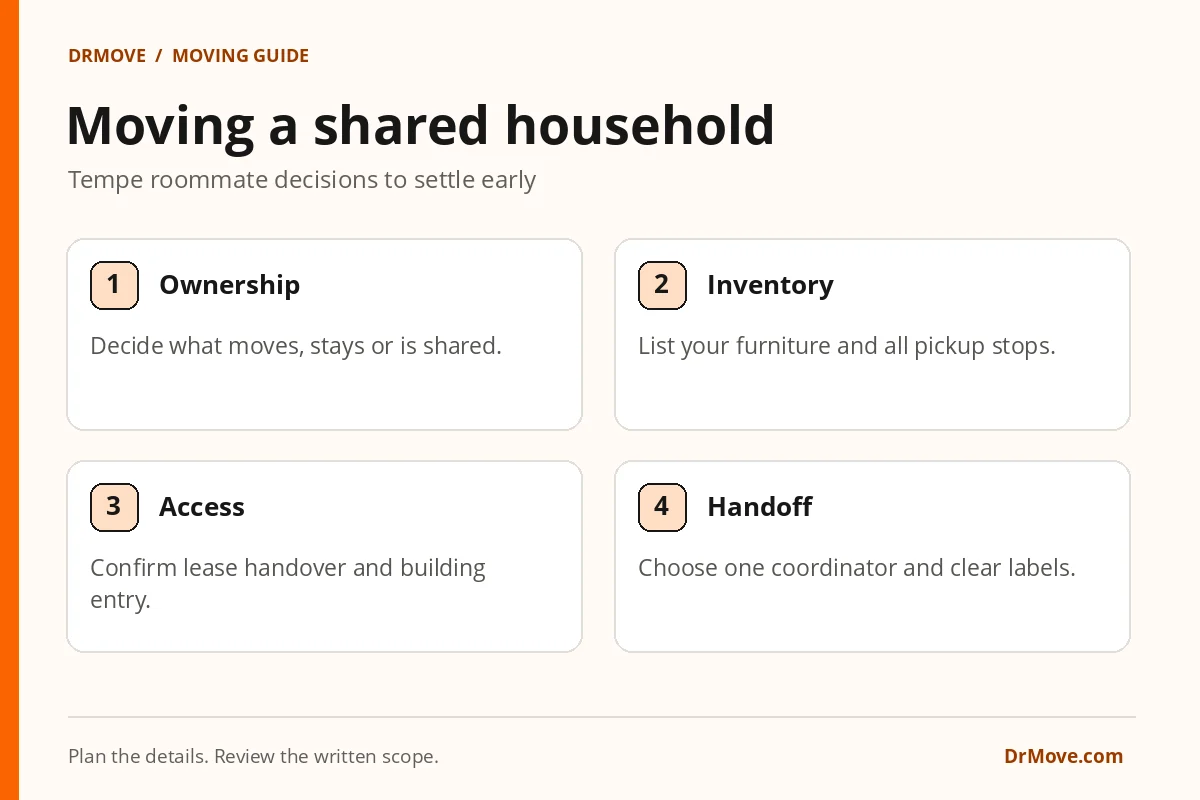
Start with your household arrangement
Are you moving an entire home, one roommate's belongings, or furniture collected from several places? Describe that arrangement before requesting a price. A one-bedroom share of a larger apartment is not the same as moving everything in the unit.
Make a list showing what belongs to you, what belongs to another person, and what you jointly need to decide about. Settle those decisions before the appointment where practical. The moving crew should not be asked to resolve ownership questions.
Choose one contact for the move. That person should know the final inventory and destination plan. If roommates are helping, have them send updates to the same person so the job does not develop several conflicting versions.
Separate furniture decisions from packing decisions
Large shared items can be the hardest part of a roommate move. Decide who keeps the sofa, dining table, television stand, or shelving before boxes are packed around them. Confirm whether an item will move, stay, or go somewhere else.
Measure the new space where practical. A shared sofa may not fit a smaller apartment, and a large desk may be awkward in the new layout. An early measurement can prevent paying to move an item that has no workable destination.
Keep the mover's list current as those decisions are completed. If an item is still undecided, flag it as a question rather than quietly leaving it out of the inventory.
Check lease timing and real access
Find out when you receive the new keys and when the old property must be handed back. If those dates leave a gap, discuss your options before choosing a moving appointment. Do not assume the mover provides temporary storage or can hold belongings unless that service has been explicitly agreed.
Ask both properties about moving hours, truck loading, elevator reservations, and gate access. A new lease date does not explain the building's moving procedure. Obtain the actual instructions from the relevant property contact.
If you are moving into or out of managed student accommodation, check that property's own current instructions. Keep housing requirements separate from assumptions based on a previous apartment or another person's move.
Write an access note the crew can use
A useful access note includes the correct entrance, building number, unit, floor, stairs, elevator arrangement, and loading location. If navigation leads to a leasing office, explain how the approved loading route differs.
Walk the path from loading to your door. Look for courtyards, narrow gates, stairs, and long corridors. Describe those conditions during quoting so the provider understands the actual work at both ends.
Do not share unrelated personal information in the access note. Provide what is needed for the move through the appropriate communication channel, and keep the property contact available if entry authorization is required.
Inventory the places you use least
Once the main furniture is listed, check closets, under-bed storage, cupboards, balconies, and any external locker. Books, kitchenware, sports equipment, and stored decorations can add a meaningful number of containers to a seemingly small move.
Count the belongings you are actually taking. If you plan to sell or donate items, make those arrangements early and remove them from the final scope when the decision is complete. Avoid leaving unplanned piles for the last evening.
Use DrMove's room-by-room inventory checklist to keep the information together. Create a separate list for personal items you will carry yourself so they remain outside the main load.
Pack for the new rooms, not the old ones
Label containers with their destination and a short contents description. If your old bedroom becomes a combined work and sleeping space in the new home, labels should help you place items where you will use them next.
Use secure containers and manageable weights. Books and kitchenware can make a large box difficult to handle. Cushion fragile belongings appropriately, and ask the mover about anything needing special packing or preparation.
Keep personal essentials apart from the loading inventory. Chargers, keys, important documents, clothing, and first-night necessities should be easy to reach. Let everyone helping know which bag or area is not going into the moving load.
Plan around work or study commitments realistically
Moving and attending a demanding workday or study schedule at the same time can create competing priorities. Set aside time for packing, key collection, the appointment, and the first stages of unpacking. Avoid assuming the entire process will happen during a brief gap.
If you need your computer or desk immediately afterward, plan those items carefully. Keep necessary account information and essential equipment accessible. Arrange internet setup separately from the moving service.
When someone else will supervise part of the move, give them the current inventory, room plan, access instructions, and provider contact. They need enough information to answer practical questions without guessing what you intended.
Compare quotes using the same shared-household scope
Tell each provider exactly which part of the property is moving. Include all pickup locations and requested services. Otherwise, one offer may describe a single room while another includes the shared furniture and additional stops.
Ask about packing, materials, furniture preparation, disassembly, and reassembly when you want those services. Confirm availability and responsibilities in writing. Do not treat a general service description as proof that every task is included.
Review our binding moving quote guide before accepting. DrMove's binding price applies to the agreed move, so inventory or access changes should be discussed and reviewed before moving day.
Create a clear move-day handoff
At pickup, identify the items that move and the items that stay. Labels and separated areas are more reliable than asking several people to remember verbal exceptions. Point out any change before loading begins.
At delivery, use the destination plan to guide furniture and box placement. If two roommates have similar containers, use names or room codes that are easy to distinguish. Keep walking paths and entrances open.
After unloading, review the completed work and check the old property for forgotten belongings. Follow the property's key-return and handover process. A nearby address does not mean you will retain access after the tenancy ends.
Settle shared expenses separately
If roommates are dividing moving costs, agree on that arrangement before choosing services. Identify which belongings and stops belong to each person, and decide how shared furniture is being handled. Keep the household's internal payment arrangement separate from the provider's written terms.
Choose one person to submit the current inventory and communicate changes. That person should not have to infer whether a roommate's extra shelf or storage pickup was intended to be included. Confirm those additions before sending the request.
Also decide who will complete the shared cleaning and key-return tasks. A roommate may have moved their belongings while still having responsibilities at the old property. Writing the remaining tasks down helps everyone understand what is finished, what still needs attention, and who is handling it before the final handover.
Tempe moving questions
Can I request a mover for only my belongings?
Describe the exact inventory and all locations in your request. DrMove will review the route, scope, and availability for your move. Label the items clearly so the crew can distinguish them from belongings staying in the shared home.
What if my new place is not ready on the planned date?
Tell the mover as soon as you know. Review the booking and rescheduling terms, and discuss any additional arrangements you need. Do not assume storage, waiting time, or a different delivery plan is included without written agreement.
Do I need a home visit to start?
No. DrMove starts the quote online. Provide complete information about the inventory, access, and services, then review the written quote and confirmation steps before agreeing to your move.
Does a quote request reserve the date?
A request begins the process. Check the acceptance requirements, available date, and final booking confirmation before organizing other commitments around the moving appointment.
Put the shared details into one moving plan
The most useful preparation for a Tempe move is a clear division of belongings, confirmed property access, and a schedule that fits your actual handovers. Resolve those questions before the final packing rush.