
A storage unit can be easy to describe by its floor size and difficult to describe by what is inside. Furniture may be hidden behind cartons, the inventory may have changed since move-in, and the route may involve gates or an elevator. When requesting Tempe movers for a storage pickup, explain the belongings and access separately so the provider can assess the actual work.
This guide focuses on collecting accepted household goods from a storage unit. It does not promise storage availability, facility access, specialist handling, or removal of every type of stored material. Start with our Tempe movers page for your request, then build the unit-specific pickup plan below.
Identify the actual pickup location
Record the facility’s address, the relevant entrance, the unit identifier, and the floor or level. Ask the facility contact how a moving vehicle reaches the permitted loading location. Distinguish a drive-up unit from one reached through an interior route. The street address alone does not show where the moving work begins.
Keep access information in the provider’s agreed private communication channel. A public route sketch can explain a corridor or loading bay without displaying gate codes, account passwords, or unrelated rental records. Identify the person who will provide authorized access and the information they need to carry out that role.
If you rent more than one unit, list each separately with its assigned belongings. Do not let two unit numbers become one vague “storage stop.” Tell the provider whether the units share the same entrance, route, and access arrangement so it can review the work without assuming that every pickup occurs at the same door.
Inventory contents instead of relying on unit size
Give the provider a current description of furniture, carton groups, and other accepted belongings. A unit’s dimensions describe space, not a reliable item count. The same space can hold a few bulky pieces or many densely packed containers. State what you know and identify any quantity that remains an estimate.
List substantial pieces individually and record approximate dimensions where useful. Count packed cartons by recognizable groups, noting when contents or packing condition are unknown. Include belongings that sit behind the first visible row. A photograph of the entrance can support a discussion, but it may not show everything the provider is being asked to collect.
Use our moving inventory checklist to organize the list. Replace room names with unit zones where helpful, such as rear furniture, left shelving, or front cartons. Keep the labels simple enough that you and the provider can identify the same group without reconstructing the entire history of how the unit was filled.
Make an information visit before finalizing the request
If safe and permitted, visit the unit before the quote review rather than relying only on an old memory of the contents. Check whether the inventory and access still match your records. You may discover that a cabinet was removed, another household member added boxes, or a large item is not prepared in the way you expected.
Do not climb unstable stacks or pull heavy items out merely to get a better picture. Mark inaccessible or uncertain groups and ask the provider how to resolve the information gap. An honest incomplete inventory gives it a question to review. A confident-looking guess can leave both parties planning a different job from the one waiting at pickup.
Set a deadline for missing information. Identify who will confirm the unknown quantity or obtain the relevant facility instructions. The goal of the visit is to produce a current request, not to complete unaccepted moving work yourself. Share material changes with the provider before the arrangement is confirmed.
Decide whether the pickup is complete or partial
State clearly whether everything accepted in the unit will be collected or only identified groups. For a partial pickup, list what stays and what leaves. Give the provider a simple identification system that works at the unit, not just in a spreadsheet known only to one family member.
Resolve ownership and household decisions before the appointment. If several people have belongings in the unit, agree on which items you are authorized to move and who can approve the handoff. The moving team should not be expected to decide who owns a piece or choose between conflicting instructions at the door.
Explain whether reaching selected belongings requires other contents to be moved or repositioned. That can be additional work to review, even if those other items remain in storage. Ask whether the provider accepts the proposed task and how it will be described. “Take three things” is incomplete if those things are inaccessible behind the rest of the unit.
Review packing condition and preparation needs
Check whether cartons and protective materials remain suitable for the proposed move. Identify damaged containers, loose contents, unprotected fragile items, or furniture that needs preparation. Ask the provider what it accepts and whether repacking or another service is required. Stored goods should be described in their current condition, not as they looked when first packed.
Separate preparation responsibility from transport. State who supplies materials, who packs loose belongings, and who prepares furniture. Keep manufacturer instructions and relevant component lists available for unusual items. A storage pickup does not automatically include disassembly, technical work, cleanup, or specialist treatment of affected belongings.
Disclose conditions that may affect acceptance before the appointment. If an item needs a different professional or another arrangement, resolve that independently and update the inventory. Keep the discussion factual. The provider needs enough information to assess the goods being presented without making assumptions about unknown contents or the condition of closed containers.
Confirm current facility access and timing
Ask the facility for its current property access instructions, loading arrangements, and the time available to complete the visit and leave. Obtain the information for the actual location. Avoid assuming that office opening times, gate access, and a particular service appointment all follow the same schedule.
As one operator-specific example, Public Storage explains where its customers can find facility details and gate access hours. Use the instructions from your own facility and confirm unresolved questions directly. This reference is not an endorsement of a location or a claim that every Tempe facility uses the same rules.
Give the moving provider the confirmed constraints before asking it to accept a date. If an elevator, loading bay, or authorized contact is available only during a particular window, identify that dependency. Ask what arrangement the provider can accept rather than promising an exact arrival to the facility on its behalf.
Describe the whole route to the unit
Record the route from the permitted vehicle position to the unit, including gates, corridors, lifts, stairs, surface changes, and tight turns. State whether it is shared with other customers or affected by a specific facility instruction. A unit being on the first floor does not by itself establish a short or uncomplicated carrying route.
For large pieces, identify the relevant openings and dimensions. Our furniture route measurement guide explains how to describe item fit, while the long-carry access guide helps organize the segments between the vehicle and the room or unit. Apply the planning questions to your actual property rather than copying another building’s arrangement.
Let the provider assess handling and equipment. Facility carts or other features should not be assumed available merely because you used them on an earlier visit. Identify what has actually been confirmed and what remains uncertain so the accepted plan does not depend on an unverified convenience.
Connect storage pickup to every other stop
If the move also collects belongings from a home or delivers to several addresses, provide one complete itinerary. Assign each item group to its pickup and destination. Make sure a piece is not counted twice because it appears in both an old household inventory and the updated storage list.
State the timing constraints for each stop and ask the provider to review the sequence. The shortest drive is not the only consideration when access windows and item assignments differ. Our multiple-stop moving guide explains how to keep the full route and responsibilities consistent.
Prepare destination room names and identify any belongings going to another storage arrangement. Confirm destination access separately. A successful collection from the unit does not establish that the new home or another facility can receive the entire load under the originally imagined conditions.
Keep the facility account handoff separate
If you intend to close the rental, ask the facility about its current move-out process and the steps the account holder must complete. Confirm those directly under your own arrangement. The moving team collecting goods does not automatically notify the facility, close an account, settle charges, or confirm that every rental requirement has been met.
For a partial pickup, make sure the person responsible for the unit knows what remains and how it will be secured afterward. Agree on the authorized access handoff with the facility and household contact. Keep account credentials under the appropriate person’s control rather than giving a moving crew unrestricted access to unrelated account information.
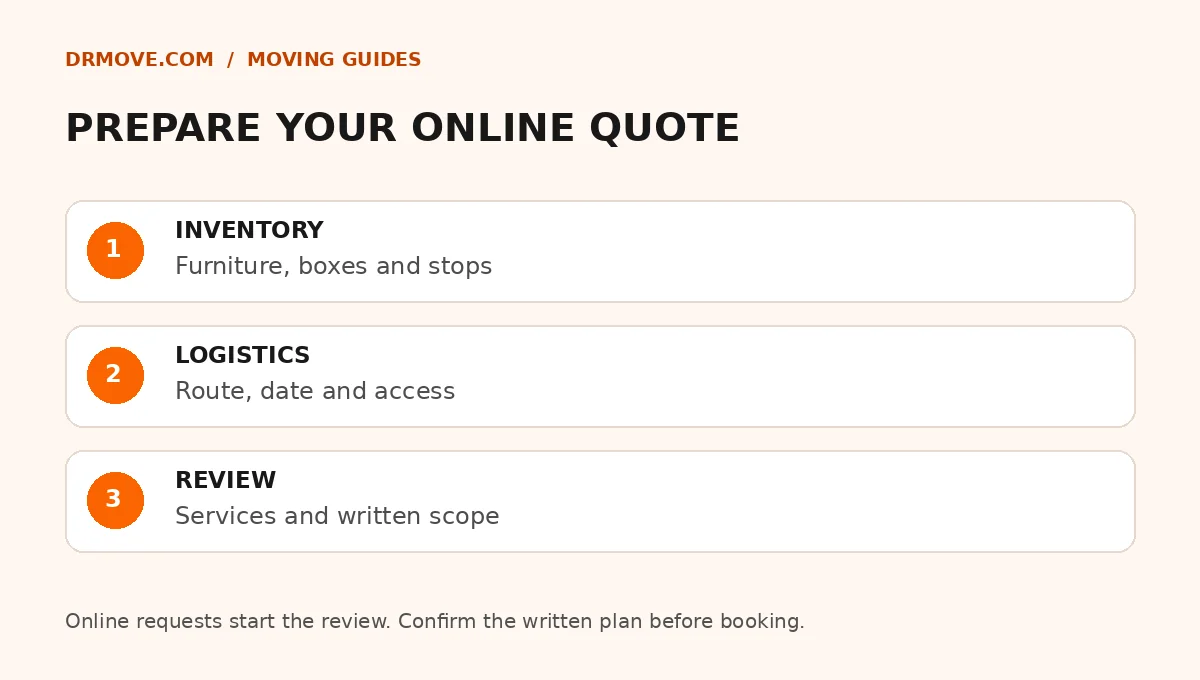
DrMove’s AI-powered online binding-quote approach covers the agreed inventory, services, and conditions without an in-home sales estimator. Include the storage unit in your online request. The current form collects a request for review; submission does not itself issue a binding price, reserve a truck, or authorize payment. Review the written quote and booking terms before agreeing. Changes to contents, preparation, access, stops, or services may require an updated written scope and quote before work changes.
A useful Tempe storage pickup plan identifies the unit, the accepted belongings, who provides access, what preparation is complete, and where each group goes next. Keep that information current through the handoff. It gives the provider a real job to assess and gives the household a clear distinction between moving the goods and managing the storage rental.